
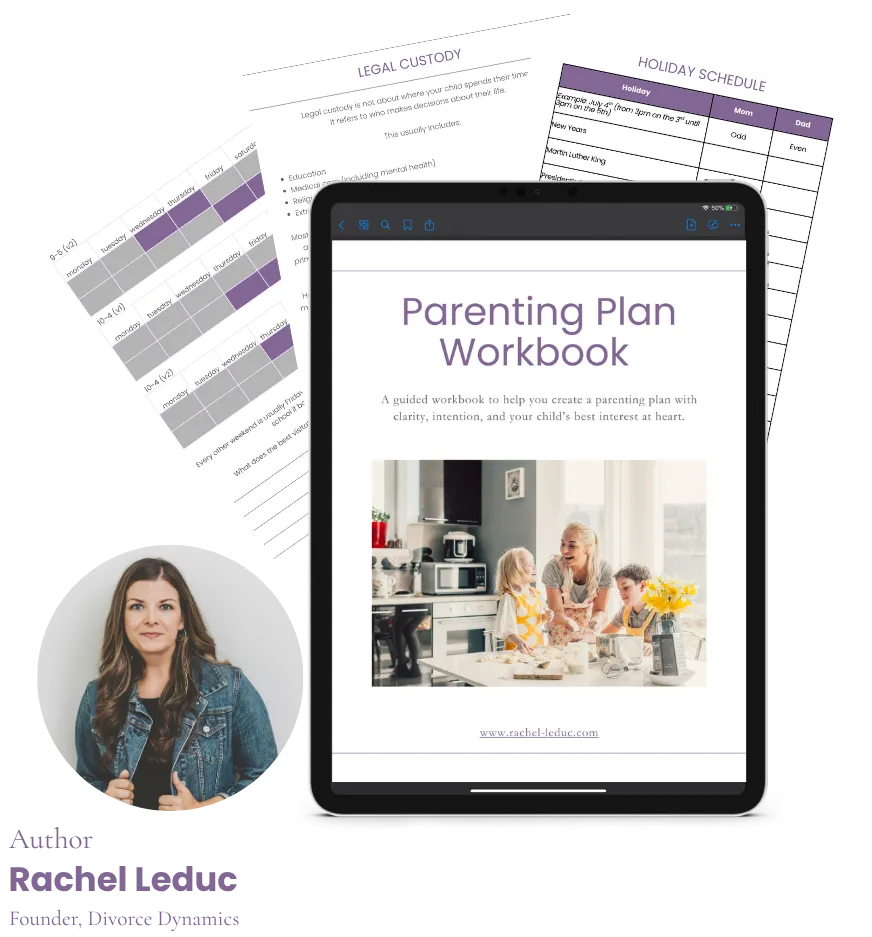
Build a Parenting Plan that works for real life.
The Parenting Plan Workbook asks the questions AI doesn’t know to ask, so you can walk into mediation knowing exactly what you need and why.
GENERIC DOESN’T SURVIVE A BAD DAY.
With a cooperative co-parent, a loose plan works. With a controlling one, every undefined word becomes a fight: who picks up, what “reasonable notice” means, what happens when a holiday and weekend visitation collide.
This workbook helps you close those gaps before they become angry texts at 10 p.m. Each section explains what the provision does, the questions to answer first, and sample language you can bring to your attorney or mediator.

Map it
Lay out the regular schedule, exchanges, and holidays in plain terms. Answer the questions that keep loopholes out before anyone else gets to answer them for you.

Define it
Turn “reasonable” and “as agreed” into specifics. Communication rules, decision-making, travel notice, and right of first refusal, written so there’s nothing left to argue over.

Protect Them
Build the plan around your children’s needs, routines, and stability. Provisions that keep kids out of adult conflict and keep their week predictable.
DON’T SPEND YOUR VACATION FUND ON A PLAN THAT GETS THROWN OUT.
After the assets are divided, the parenting plan often becomes the new weapon of control. Many custom plans cost thousands and get rewritten at the mediation table despite the time and money you've already spent. This workbook helps you figure out what you actually want and what will actually work, so you show up prepared without paying a fortune to get there.

Categories to cover
custody schedules
mediation questions

Lorem ipsum dolor
Lorem ipsum dolor
Lorem ipsum dolor
Written by a Guardian ad Litem that sees what AI gets wrong
As a Certified Lay Guardian ad Litem and founder of Divorce Dynamics, I read parenting plans with the court’s eyes. The AI-drafted plans all have the same problem: they’re written for nobody in particular. I built this workbook so yours is written for your family.

STILL NOT SURE?
Parenting Plan FAQ's
Before you ask ChatGPT, ask someone who's seen real parenting plans that work in court.
Question 1: Can ChatGPT write my parenting plan?
Generic AI can produce a document that looks like a parenting plan, but it doesn’t know your co-parent’s patterns, your children’s needs, or your state’s requirements. A plan built from generic language often leaves the gaps a high-conflict co-parent will use against you. This plan protects you from that.
Question 2: Why do generic parenting plans fail in high-conflict divorce?
Generic plans rely on words like “reasonable” and “flexible,” which assume both parents will cooperate. A high-conflict co-parent treats undefined terms as room to negotiate, so every gap becomes a dispute. This workbook makes sure those loopholes are closed so you leave the mediation table with a plan that works for real life.
Question 3: How does this work with what my lawyer gives me?
This isn’t a replacement for your lawyer. It’s what makes your lawyer’s work count. Attorneys often start from a standard plan because they don’t know your family’s day-to-day details. The workbook helps you figure those out ahead of time, so you can hand your attorney specifics instead of paying hourly rates to work through them together.
Question 4: Why is the workbook better than paying thousands for a custom parenting plan?
A custom plan written before you know what you need often gets reworked in mediation and you pay for those changes too - meaning you're paying for the plan twice. The workbook helps you sort out your priorities, non-negotiables, and the specifics that matter for your family first. You walk into mediation prepared, and any professional help you pay for goes further.

COPYRIGHT © 2026 Divorce dynamics. ALL RIGHTS RESERVED.